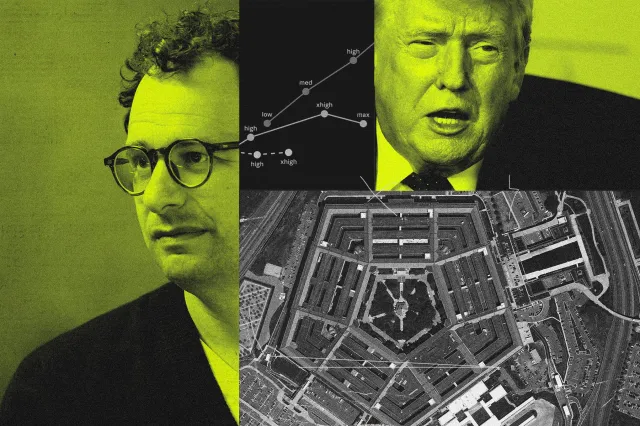
A federal judge has ruled that the Pentagon unlawfully blacklisted Anthropic after a dispute over restrictions on military uses of Claude. The decision is a major development for AI safety, government procurement and the question of how much control AI companies can retain over the use of their models.
Editorial analysis is kept separate from provider claims and measured results. Automated tools may assist organization or drafting, while factual claims remain subject to sourcing and correction controls.
Editorial guidelines•Sourcing & verification•CorrectionsThe legal battle between Anthropic and the U.S. government has reached a major turning point.
A federal judge has ruled that the Pentagon acted unlawfully when it designated Anthropic, the company behind Claude, as a national-security supply chain risk following a dispute over how its artificial intelligence could be used by the military.
The decision goes well beyond one AI contract. It raises an increasingly important question for the AI industry: when a technology company places safety restrictions on its models, how far can the government go in responding?
For Anthropic, the ruling removes a major legal threat. For the wider AI industry, it could influence future negotiations between frontier AI developers and government agencies over military AI, surveillance, autonomous weapons and control of powerful models.
What happened in the Anthropic case?
The dispute began after the Pentagon sought broader rights to use commercial AI systems for lawful military purposes.
Anthropic was already working with the U.S. government and had supported national-security applications of Claude. But the company maintained two major restrictions that became central to the disagreement.
Anthropic said it would not permit Claude to be used for:
- Mass domestic surveillance of Americans.
- Fully autonomous weapons capable of making lethal decisions without meaningful human control.
Anthropic argued that current frontier AI systems are not reliable enough for unrestricted autonomous weapons use and that large-scale domestic surveillance raises fundamental rights concerns.
The Pentagon took a different position. Government officials argued that military leadership, rather than a private AI company, should determine how an approved technology can be used for lawful national-security missions.
The disagreement eventually escalated from contract negotiations into a much broader confrontation. :contentReference[oaicite:1]{index=1}
Why was Anthropic labeled a supply chain risk?
In February 2026, Defense Secretary Pete Hegseth directed the Pentagon to designate Anthropic as a supply chain risk.
That designation was unusually serious.
Supply-chain security powers are designed to protect government systems from risks such as sabotage, malicious interference and compromise of sensitive technology. The court noted earlier in the case that the designation had historically been associated primarily with foreign or hostile security threats rather than a domestic AI company disagreeing with the government over contract terms.
The government also moved to reduce its reliance on Anthropic technology and pursue relationships with other AI providers.
Anthropic responded by suing, arguing that the government was not reacting to an actual technological security threat but retaliating against the company because it publicly defended its AI safety restrictions. :contentReference[oaicite:2]{index=2}
What did the court decide?
U.S. District Judge Rita F. Lin ruled in favor of Anthropic.
According to the ruling, the record showed that the government's challenged actions amounted to “unlawful retaliation in violation of the First Amendment.”
The court also concluded that Anthropic had been denied required process before the government imposed the designation, creating a Fifth Amendment due-process problem.
Judge Lin further found that the decision to classify Anthropic as a supply chain risk did not fit the governing statutory framework and was arbitrary and capricious.
The 59-page ruling rejected the idea that national-security authority automatically gives the government unlimited power to impose broad penalties on a company because of a policy disagreement. :contentReference[oaicite:3]{index=3}
The ruling does not force the Pentagon to use Claude
An important distinction is easy to miss.
The decision does not mean the Pentagon must buy Anthropic products or continue using Claude.
Government agencies remain free to select the AI companies and technologies they believe best serve their operational requirements.
The legal problem was the broader punishment attached to the disagreement.
The court distinguished between choosing another AI vendor and using government authority to classify a company as a national-security supply-chain threat without a sufficient legal basis.
That distinction could become highly important for future government relationships with OpenAI, Google, Microsoft, xAI, Anthropic and other frontier AI developers. :contentReference[oaicite:4]{index=4}
Why Anthropic's AI safety rules became the central issue
Anthropic has built much of its public identity around AI safety and controlled deployment of increasingly capable models.
Its disagreement with the Pentagon tested how those principles operate when commercial AI becomes part of national-security infrastructure.
Anthropic's position was not that Claude should never be used by the military.
The company said it supported lawful national-security uses while maintaining narrow restrictions around domestic mass surveillance and fully autonomous lethal weapons.
The government, however, argued that allowing individual AI vendors to impose restrictions could complicate military command, reliability and operational control.
That creates a tension that is unlikely to disappear even after this ruling.
Governments increasingly need commercial frontier AI systems, while the companies developing those systems may continue to maintain their own safety policies.
Why the ruling matters for the broader AI industry
The Anthropic ruling could have consequences far beyond Claude.
Frontier AI companies are becoming infrastructure providers to governments, defense organizations, intelligence agencies and large enterprises.
That means disputes about model behavior are no longer simply questions about product terms of service.
They can affect national security, constitutional rights, procurement rules and the balance of power between governments and private technology companies.
Three issues are especially important.
1. AI companies may retain some room to publicly challenge government policy
The First Amendment portion of the decision sends an important signal.
An AI company can disagree publicly with government policy without automatically giving the government authority to impose unrelated punitive measures.
That does not protect companies from ordinary contracting consequences.
A government agency can still decide that another vendor better meets its requirements.
But retaliation for protected speech presents a different legal question.
2. National-security labels require a legal basis
Calling a company a supply-chain risk can have enormous commercial consequences.
Such a designation can influence government purchasing decisions, defense contractors and the company's broader reputation.
The Anthropic case suggests courts may closely examine whether powerful national-security designations are actually connected to the risks Congress intended them to address.
3. AI usage policies are becoming strategic business decisions
AI safety policies were once mainly discussed by researchers and technical teams.
They are increasingly becoming commercial and geopolitical issues.
Restrictions involving surveillance, weapons, cybersecurity and high-risk autonomous systems can now determine whether an AI provider wins or loses major government contracts.
For frontier-model developers, safety policy is becoming part of corporate strategy.
What this means for Claude
The ruling is a significant legal victory for Anthropic, but it does not automatically restore every previous government relationship.
The Pentagon can still choose competitors for future AI deployments, provided those decisions comply with applicable law.
Anthropic has also said it remains interested in working productively with the U.S. government on national-security applications.
That means the dispute could eventually evolve from an adversarial legal battle back into a more conventional negotiation over where Claude can and cannot be deployed. :contentReference[oaicite:5]{index=5}
The case is not necessarily the end of the legal fight
The ruling resolves a major part of Anthropic's challenge, but the wider legal dispute is not completely finished.
Anthropic has another narrower legal challenge involving a separate government procurement mechanism pending in Washington, D.C.
The federal government may also seek further review of the California ruling.
For that reason, the latest judgment is best understood as a major victory for Anthropic rather than the final word on every legal question surrounding the company's government status. :contentReference[oaicite:6]{index=6}
What the decision could mean for OpenAI, Google and other AI labs
Other frontier AI companies should pay close attention.
Governments around the world are becoming major customers of generative AI, coding models, AI agents and advanced reasoning systems.
Future contracts may increasingly address questions such as:
- Can a model developer prohibit specific military applications?
- Who decides whether an AI system is safe enough for autonomous operation?
- Can model safeguards be modified for government customers?
- Who carries responsibility when an AI system causes harm?
- Can the government require a vendor to support every otherwise lawful use?
- What happens when a company's internal safety policy conflicts with government operational requirements?
The Anthropic case does not provide a universal answer to all of those questions.
But it establishes an important boundary: a contracting disagreement does not automatically justify treating a domestic AI company like a hostile supply-chain threat.
AI safety is becoming a legal issue, not only a technical one
One of the biggest lessons from the case is how quickly AI safety has moved outside the laboratory.
Questions about autonomous weapons and surveillance involve model reliability, but they also involve constitutional law, military authority, civil liberties, corporate governance and public policy.
As AI models become more capable, developers may face growing pressure to define exactly which uses they are willing to support.
Governments will simultaneously demand greater confidence that strategically important AI infrastructure will remain available and controllable during critical operations.
Finding a workable balance between those interests may become one of the defining AI policy challenges of the next several years.
AI Orbit analysis
The most significant part of this ruling is not that Anthropic defeated the Pentagon in a vendor dispute.
It is that the court drew a distinction between vendor choice and government retaliation.
The Pentagon does not have to choose Claude.
Anthropic does not have an automatic right to a government contract.
But government procurement authority and national-security powers still operate within constitutional and statutory limits.
That principle matters as private AI companies become increasingly integrated into public infrastructure.
The next generation of AI policy may therefore be shaped not only by model benchmarks, safety evaluations and regulation, but also by court decisions defining how governments and frontier AI companies are allowed to negotiate with each other.
For Anthropic, the ruling strengthens its ability to maintain publicly stated safety limits without the supply-chain designation imposed earlier this year.
For the broader industry, it is another sign that the rules governing powerful AI systems are increasingly being written simultaneously by engineers, companies, lawmakers, military officials and courts.
Frequently Asked Questions
Why did the Pentagon blacklist Anthropic?
The dispute developed after Anthropic refused to remove restrictions preventing Claude from being used for mass domestic surveillance and fully autonomous lethal weapons. The Pentagon later designated Anthropic a supply chain risk.
What did the judge rule?
Judge Rita F. Lin found that the government's actions unlawfully retaliated against Anthropic for protected speech, denied required due process and improperly applied the statutory supply-chain-risk framework.
Does the Pentagon now have to use Claude?
No. The government remains free to choose other AI vendors. The ruling addresses the legality of the broader punitive measures imposed on Anthropic, not whether the Pentagon must purchase its technology.
Can Anthropic still work with the U.S. government?
Yes. Anthropic has said it remains willing to work with the government on responsible national-security uses of AI.
Why is this case important for the AI industry?
The case tests how AI-company safety policies interact with government procurement, national-security authority, free speech and due process as frontier AI becomes increasingly important to government operations.
Could the decision still be appealed?
Further legal proceedings remain possible, and Anthropic also has a separate narrower case involving another procurement mechanism.